Providing Effective Feedback to Lab Trainees and Students

There’s something that underpins not just excellent training but excellent laboratories too; it’s the staff. But understanding how we take a trainee from their early days at university or initial days as a qualified Biomedical Scientist through to becoming a confident and competent Biomedical Scientist is a complex process.

At the heart of that process lies feedback. How we give it, when we give it, and the culture that surrounds it. Training isn’t just about ticking boxes or signing off competencies it’s about creating an environment where people grow. Feedback is the fuel for that growth.

So whether you’re a training officer, a laboratory manager, or a BMS in training yourself, I want this article to serve as a reflection on how we can do feedback better.


1–2 minutes
Continue reading

The Science Behind Sickle Cell: From SNP to Sickling

Sickle Cell Disease (SCD) is one of the most well researched and understood genetic blood disorders. Despite this, its impact is profound both clinically and socially. At its core lies a single nucleotide polymorphism (SNP), just one nucleotide change is all that’s required for such significant downstream effects ranging from red cell morphological changes to global health schemes. This post takes a walk through that journey from the SNP through to the sickling and how such a small change can lead to such a big problem.

1–2 minutes
Continue reading

Interpreting IG flags on the Sysmex XN: A Biomedical Scientist’s Practical Guide

Immature Granulocyte (IG) flags are more than just a numerical threshold they’re an insight into a patient’s underlying immune response. Whether you’re new to blood film review or an experienced BMS refreshing your practice, this guide will walk you through how to approach samples flagged for IG review, how to decide if a manual differential white cell count (DWCC) is needed, and how to interpret what you see on the slide.

1–2 minutes
Continue reading

Blast Cell Identification in Peripheral Blood for Biomedical Scientists: A Practical Guide

Blast cells are often feared by both newly qualified and highly experienced Biomedical Scientists alike. Although tricky, it is extremely important that anyone reviewing a peripheral smear is confident and capable of identifying them and taking the appropriate actions following identification. These cells are always pathological in the peripheral blood and it is vital for early intervention that this topic is afforded the time and patience it requires.

1–2 minutes
Continue reading

Creating a Successful Training Environment

There’s something that underpins an excellent working laboratory and it’s not difficult to guess what that is; It’s the staff. But understanding how we arrive at the finished product of a well rounded, educated, and knowledgeable Biomedical Scientist (BMS) is a bit more of a complex task.

Developing a Biomedical Scientist from their initial days in the laboratory through to a competent and knowledge hungry BMS is a process in itself and I think it’s important to discuss the importance of how we can start out on the right foot. Ultimately at some point you will either be involved with training a biomedical scientist or you may be one that is currently training and so I would like this article to serve as a primer on the training environment itself. Training is not a task, it’s a culture.

It’s always important to start out on the right foot. It’s often said that failing to prepare is preparing to fail and I think this is as true in the laboratory as it is anywhere else. So if you’re a BMS in training or a training officer responsible for the training environment itself, or someone with a bit of an interest in training then this is the article for you.

1–2 minutes
Continue reading

The Update!

I’ve had some free time recently away from everything. Specifically I spent a couple of weeks on holiday in the obviously sunny and ever prospering midlands of England. That being said I have now arrived slap bang into my final year of university. I use the phrase “slap bang” for a reason. It’s only day four and already I’ve been busy. But with what?

Continue reading

The Haematology Laboratory

In my previous post I provided an overview of my time on placement. What I’d like to do with this post, is give a little more insight into the on goings of the haematology laboratory, the sections within it that a biomedical scientist can work in and what goes on in these sections.

Continue reading

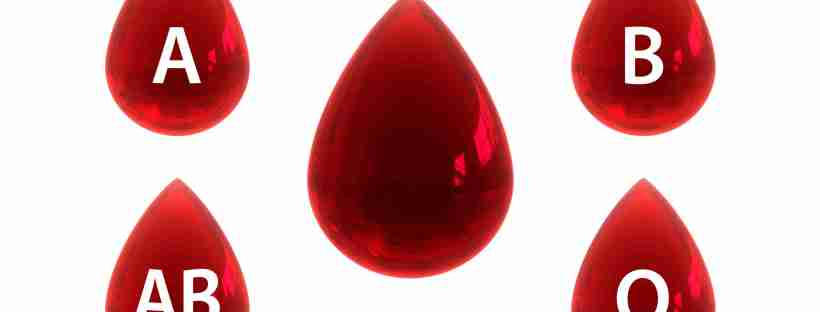
Bacteria Turning Type A/B blood into Type O

So, I had other plans for what my first scientific based post was going to be. However, as you may have noticed. The scientific community has rather obsessively purported this story around the globe. As a scientific blogger and specifically as the “Blood Geek” I really think I should make comment on this article and explain to you all what the fuss is all about and whether it is, everything it’s cracked up to be.

Continue reading

The Beginning Years (Academic)

As we progress through this journey, we arrive at the beginning of my journey to becoming a Biomedical Scientist (BMS). When we last left off, I had realised where I was really meant to be. On a different side of healthcare. Somewhere that I could apply a much more scientific approach to, but all the while maintaining a presence in the journey of my patients. Biomedical sciences was the role for me, so I applied to the course during my working year out and thankfully was accepted to the programme. But what goes on during the initial years of the course? and how does a BMS come to bridge the gap of science and medicine?

Continue reading

My First Hurdle


At this stage, with a little background provided in previous posts. It’s about time I started to bring you up to speed with my story. So lets start at the end of my BTEC study and discuss the swings and roundabouts method that I appear to have employed, in order to get where I am today. It’ll probably be nothing like what you’re expecting.

Continue reading