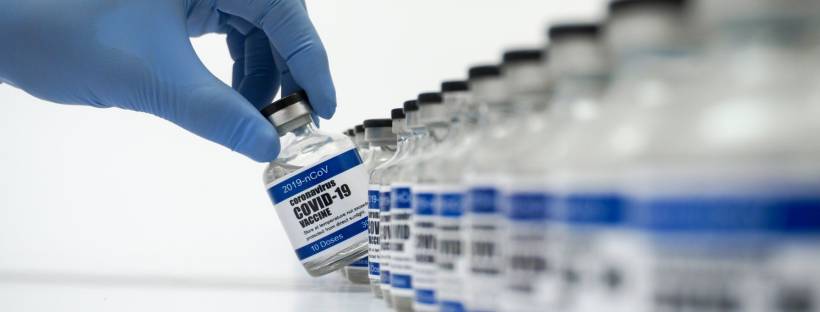
Very often, I find myself hearing the same problems brought up about a popular science topic and thinking about how many times I will have to produce an answer to that problem. Very rarely has it been quite as bad as recently. With the introduction of the new COVID vaccines into circulation, and the imminent vaccination of thousands, people have been somewhat concerned about aspects of the vaccine. In this article, I plan to address the topic of long term effects and why it shouldn’t stop you getting vaccinated.
In case you’ve been in hibernation recently, here is a brief description of the events of recent weeks;
On the second of December 2020, the UK became the first country to approve the use of the Pfizer/BioNTech mRNA vaccine targeted against the SARS-CoV-2 virus, which causes COVID-19. An emergency use authorisation was granted to the vaccine after reports from the seven months worth of clinical trials were published. At the time of this emergency use authorisation, only two other countries had approved any vaccines for use. China and Russia. The plan as of today (07/12/2020) is to issue the vaccine firstly to healthcare workers, care home staff, and care home residents, following up with the rest of the population in the beginning months of 2021.
Naturally, news of this authorisation broke rapidly and served to completely polarise the general public. People are either determined to have the vaccine, or certain that it will kill them. From the outside looking in, you could easily be convinced that there is no middle ground in this case. One of the primary concerns of the people who claim they won’t be getting the vaccine, is the idea that seven months worth of clinical data isn’t good enough to determine the long term effects of a vaccine. Here’s why that isn’t actually the case.
The Clinical Trials
Clinical trials are purposely designed in away as to maximise the data collected over the period of the study. This includes the amount of possible bad consequences, or as we refer to them “adverse events”. If you have ever taken some time to have a read of the details of a clinical trial for any drug or compound, you will notice the painstaking detail revolving around what has been determined to constitute an adverse event. Anything from redness at the injection site, to an anaphylactic reaction is included. Under normal circumstances, this is a particularly stringent part of the process because of the fact that we are administering weakened virus or bacteria into the participants. With this process there is the potential for pathogens to reactive and cause persistent infection. Now, you may have noticed that the COVID-19 vaccine from Pfizer is mRNA based. This means that there is no weakened virus in the vaccine (in fact, none of the current vaccine candidates that have made it as far as phase III trials have weakened virus) . So it isn’t even possible for there to be any viral reactivation and this narrows down the timeframe within which adverse events can occur.
The vast majority of adverse events that occur from vaccine administration, happen within the 72 hour window immediately following administration of the vaccine. These sorts of things include anaphylactic reactions and rashes. The sorts of issues you think of creeping up straight after you get a vaccine. Anything that hasn’t shown up by this stage, will almost certainly show up within 2 months of vaccine administration. This is primarily a function of the way in which vaccines elicit their effects. The job of a vaccine is to get your immune system to play it’s part, and begin producing antibodies and retaining a “memory” of a particular pathogen. Once the vaccine is excreted from your body, all you’re left with is your own immune response. With this in mind, it is perfectly reasonable to assert that the clinical trials will have had plenty of time to capture well over 99% of the possible adverse events.
If you ever decide to look a little further into vaccine or drug development, you will come across the length of time it takes (on average) to develop a compound for use in humans. That average stands at around 13 years, with only one in every 10,000 compounds making it to market. But time elapsed, is not a function of a safety study. There is no arbitrary time stamp set upon a study that must be reached before safety can be verified. In fact that would be a counter intuitive metric to use. It would prolong the amount of time taken to get products onto the market and thousands would suffer even longer without valuable medication they need. Hopefully for the reasons explained above, you will now understand why this is the case. Most of the time spent in clinical trials is actually between the study phases. Lets not forget that pharmaceutical companies are in strong competition with one another. They don’t share their data and so if you want to produce a new compound you’re going to have to do it from scratch, with no help, and you’re going to have to spend an awful lot of time convincing governments, charities, universities, and businesses, to fund your venture. This takes a long time to do properly. Especially considering that you have to write grant applications to each of these places to explain your product. To explain how you plan to conduct your study. To explain exactly what is going to be done with the money.
In the case of COVID, we are in the middle of a global pandemic. It is in everyone’s vested interests to have a vaccine sooner rather than later. For the first time ever, funding and resourcing have been in abundance. International collaboration has lead to data sharing on an unprecedented scale. We have truly been witness to some of the most amazing feats of scientific endeavour that we will see in our own lifetime.
Previous Safety Data
mRNA vaccines may be new to a lot of you but just because the technology is novel, doesn’t mean it isn’t backed up by years and years of previous research. In a short description of events, mRNA was discovered in the 60’s. By 1989 we were already complexing it with lipid particles to get it delivered into tissues and although the data from Malone and colleagues was good, the projects were essentially abandoned due to a a lack of understanding of mRNA at that time. A few years later in 1994, Zhou and his colleagues made an attempt at the first recognisable mRNA vaccine and it was a great attempt. Data from their study showed that the vaccine did indeed stimulate an immune response. Fast forward to 2003 and we make the vital discovery that spike proteins found in the SARS and MERS viruses (Both SARS and MERS are also coronaviruses) make ideal antibody targets i.e. when the body comes in contact with these portions of the virus we develop antibodies against them. A fact which we can now exploit in developing therapeutics such as vaccines. In 2008 we have the introduction of both a Phase I and II clinical trial using an mRNA vaccine in patients with melanoma. The trials were small scale but crucially they involved human participants and the results once again, were promising.
The entire point of the above paragraph is very simple. The notion that no safety data for mRNA vaccines existed before the beginning of 2020 is demonstrably untrue. The next time someone pops up on your feed claiming to be dumbfounded by the lack of data on mRNA vaccines, tell them to try looking a little harder from as far back as 1989.
The Odds
Documented long term complications from vaccine administration are extremely rare. At present, taking into account all of the available vaccines in the market today, the figure stands at around 1 in 4 million. To put some perspective to that figure, here is an entertaining list of things more likely to harm you;
- Odds of dying in a car crash – 1 in 103
- Being wrongfully convicted of a crime – 1 in 3,703
- Odds of being killed by a falling meteorite – 1 in 12,000
- Winning an olympic gold medal – 1 in 662,000
- Being struck by lightning – 1 in 700,000
- Successfully making it in Hollywood – 1 in 1.5 million
Now balance that against the odds of not receiving the vaccine at all or contracting COVID yourself. We know with absolute certainty that COVID sufferers are coming out the other side of infection with issues that will plague them for a long time to come. Without getting too far outside the scope of this particular article, we know about gross pathological damage to respiratory tissue, activation of in-vivo coagulation, liver toxicity, neurotoxicity, fertility issues in both sexes, pulmonary functional deficits, and more.
To clarify while we are still talking about the numbers, it’s often thrown up that a virus with a 99.9% recovery rate doesn’t require a vaccine. As I’m sure the majority of you are aware, the figure is incorrect and the recovery rate is lower than that. But, I am going to entertain that figure for now. The population of the earth at the time of writing this article is 7.8 billion people. Let’s stick with the 99.9% and work out what that means. 0.1% in this case, are the people who don’t recover. That means that 7,800,000 deaths are just going to be swept to one side as what exactly? inevitable? I think not. Think about that for a second. The people who are campaigning that there is no need for a vaccine to tackle a virus with a 0.1% fatality rate, are afraid of the 0.000001% chance of a potential adverse event from a vaccine. If you’ve noticed, I even dropped the odds of an adverse event down to 1 in 1 million for that calculation just to include an uncertainty measurement which in reality would never even come close to 25% of the original value.
Closing Notes
We must also not forget that we synthesise a brand new influenza vaccine every single year. The safety and efficacy studies and the clinical trials are running constantly throughout the year to get a vaccine ready for the new influenza season. I don’t hear anyone complaining about that vaccine being rushed. Yes it’s much less effective, but that’s a topic for a different article.
You shouldn’t take the idea that because the UK approved the emergency use of this vaccine so early as a bad sign. The Medicines and Health Regulation Authority (MHRA) are notoriously strict in what they will accept as far as valid clinical data goes. You will often find that a number of Food and Drug Administration (FDA) approved products do not meet MHRA standards. Having a product marketed in America before having it on the UK market is commonplace. Demonstrating FDA approval is often brandished to the UK market by companies wishing to achieve MHRA approval. Also, the MHRA has been conducting what is known as an interim analysis throughout the clinical trials. What this means is that although the data was not publicly available during trial for everyone else, the MHRA were able to continually assess the data as it was collected. This left them in prime placement for making a decision as and when the data was made publicly available. This happened in early November and it then only took around a month’s worth of consultation with other scientific bodies to make a decision.
Here is the study document for all three phases of the Pfizer-BioNTech vaccine in case you’re interested in a little light reading: https://pfe-pfizercom-d8-prod.s3.amazonaws.com/2020-11/C4591001_Clinical_Protocol_Nov2020.pdf
 Blood Geek
All manufacturers talk about the efficacy of these new vaccines, they say they are 95% effective or so. In order to calculate the vaccine effectiveness you need know two important factors:
– RRR – relative risk reduction
– ARR – Absolute risk reduction.
Under experimental conditions you have two groups:
– EER – (experiment event rate) the vaccinated people
– CER – (controlled event rate) the placebo group
The 95% effectiveness is the RRR, (used for research purposes) not the ARR!! (ARR used for public health publications) . You cannot calculate the ARR until the trials are finished.
The mRNA vaccines are still on clinical trials until 2023.
BioNTech Pfizeer Vaccine:
https://www.clinicaltrials.gov/ct2/show/NCT04368728?term=pfizer+vaccine&cond=Covid19&draw=2&rank=3
Astra Zeneca:
https://clinicaltrials.gov/ct2/show/NCT04516746
The infection fatality rate of Covid is 0.23:
Click to access BLT.20.265892.pdf
LikeLike