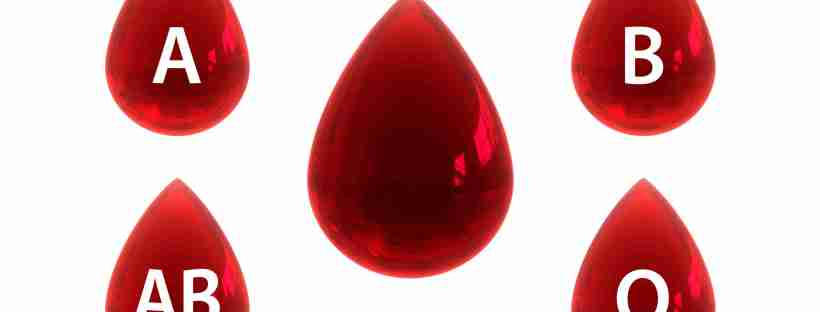
So, I had other plans for what my first scientific based post was going to be. However, as you may have noticed. The scientific community has rather obsessively purported this story around the globe. As a scientific blogger and specifically as the “Blood Geek” I really think I should make comment on this article and explain to you all what the fuss is all about and whether it is, everything it’s cracked up to be.
I’m going to be working off the following articles so if I make any quotes or you wish to read the article for yourself please feel free to do so: https://www.ctvnews.ca/health/gut-bacteria-could-provide-key-to-making-universal-blood-type-1.4061241
https://www.sciencedaily.com/releases/2018/08/180821094216.htm
The Science
Lets kick off this post with a little bit of basic blood science to bring everyone up to scratch. As most of you will know, your blood can be grouped using a number of different systems. Most commonly and the systems the average person is aware of, are the ABO group and the Rh(D) group.
It was in 1901 that the ABO blood grouping system was discovered by Dr. Karl Landsteiner. His discovery was based on experiments he carried out on the sera of his co-workers. Sera being the liquid component of blood, minus the red cells. What he did was introduce the sera of various co-workers to the red cells of other. It was after doing this he started to make note of agglutination (clumping) patterns forming in some of the samples. After working relentlessly with the new information, Landsteiner was able to develop his theory and eventually come to the conclusion that there were blood groups which he determined to be A, B and O. Around a year later in 1902 two of Landsteiner’s students, DeCastello and Sturli discovered the additional AB blood group.
Over a hundred years later and this theory has developed significantly and the knowledge base surrounding it has grown exponentially. We know understand that these blood groups arise from an ABO gene present on chromosome 9. This gene encodes an enzyme (α1,3-N-acetyl-D-galactosaminyltransferase for those of you who are interested) which thusly catalyses (enhances) the addition of a carbohydrate group to the end of a carbohydrate stalk, present on the red cell surface. This, what we call, immunodominant carbohydrate determines the blood group as either A or B. No enzyme production results in no addition of the immunodominant carbohydrate and this is group O. Those of you with a little genetics knowledge may make the presumption that this is because the A and B alleles are codominant and you would be correct. Leaving O as amoprhic i.e. no output.
Here’s a handy little graphic explaining this. The black stalk is the carbohydrate chain present on the surface of all red cells which we call H antigen. Group O which we’ve said doesn’t have anything added to it, is bare. Groups A and B have different attachments on them. What we referred to as the immunodominant carbohydrates. AB therefore possess both A and B carbohydrates. Collectively, the stalk plus carbohydrate attachment becomes an antigen, that is, any substance which causes antibody formation. Hence why they are referred to as A or B antigen in the diagram below.

The Article
So now you know how the ABO blood group works, and that’s enough to follow on with this article that’s floating around about ABO conversion by bacteria.
The first point I’d like to make regards the following statement.
“People with Type O negative blood are considered universal donors, as they can donate blood to anyone.”
So technically this isn’t true. There is in fact no such thing as the universal donor. It’s one of those topics that is explained the way it is, to make it a little easier to understand. Whilst O- blood is extremely useful to us and is by far the best bet when it comes to emergency transfusion of blood, there are still a proportion of people who will react badly if transfused with O- blood. I’m not going to provide an in depth explanation of this as it is outside the scope of this article and it could be an article all of its own. It’s to do with some interesting genetics of another one of the blood groups known as RhCE. Perhaps I will make another post explaining this another time. So for clarity sake allow me to elaborate. The vast majority of people will be able to receive O- blood however a small percentage won’t. This is a very pedantic point but if there’s one thing you’ll come to learn about scientists and about me, it’s that we are huge pedants.
All this being said, in an ideal world. The conversion of units into O- would be an excellent advantage to us. Units of O- red cells are quite often under stocked and hard to get. Around 6% of the UK population is O- so there isn’t a lot of it going around. Getting as many individuals to donate as possible is important to ensuring supplies of emergency blood are available. These O- units are what is given to patients whom we haven’t ascertained a blood group for. When a patient of unknown identity or blood group come sin requiring emergency blood, O- is given until the samples taken are received by the laboratory and crossmatched to determine the patient’s group. After that, group specific blood can be given. Like I pointed out previously, O- isn’t necessarily universal but for the unknown blood group, it’s out best shot.
So how exactly does this conversion take place? These findings were presented to the American Chemical Society at their national meeting. What this means is that we don’t have a published research paper to work off. So we will have to take the words of Dr. Stephen Withers who conducted the research until his paper is published and we can assess the facts and figures.
Here we come to the first point of why journalism can be misleading in the science world. You may see this article creeping up on your newsfeed labelled along the lines of “Gut bacteria used to convert blood types” or something to that effect. The misinformation here is that it won’t be the bacteria doing the converting. The bacteria are simply being used as a “breeding ground” if you will, for the necessary enzyme. A practice which is quite commonplace in this industry.
Ok, so this enzyme will convert my blood group to O if I’m A or B and that will mean we have all the O blood in the world and we won’t ever be short again. Hooray!
Not so fast. With no statistical analysis done yet, it’s going to be very hard to comment on success of this experiment yet. However, there are some points which do need addressed. For this to work, there needs to be as close to 100% conversion of the blood group as possible. Leftover A or B red cells could certainly cause sensitisation at the very least, or a transfusion reaction. It could be mild, but it isn’t something to be played with. This process needs to be extremely efficient before it ever makes it into the realm of hospital transfusion practice. The major problem with attaining 100% efficiency of any method is going to be money. In order to be absolutely certain you’ve removed all non-converted cells you will have to employ a method of assessing the sample for other groups. A method which is significantly sensitive enough to pick up single cells. That’s going to be costly.
Another point to note is that this deals solely with ABO grouping. It removes the immunodominant carbohydrate present, therefore converting the ABO group. Even assuming a 100% effective method, we still have to account for some of the other blood groups. Rhesus D for example. If a patient is A+ then the conversion would make their unit O+ which isn’t what we need for emergency patients. Given that A+ is the second most common blood group at 35% of the population, we don’t necessarily have the pool of people we thought could give us all this O-. In fact only 6% of the population are A-, the group required to convert to O-. Of course we’ve still doubled our pool of resources (6% O- and 6% A-) but this isn’t a massive amount.
Again there are numerous other groups which I won’t be able to cover in great detail today, but these all effect which blood you can and can’t receive. Some are more clinically significant than others and without conversion of these blood groups, people may still not be able to receive the unit. Research conducted in the past as also shown that attempts at ABO group conversion (yes, people have tried this before) has resulted in unstable red cells.
There are also other cases of this which have been common knowledge for a long time. There’s a situation known as “acquired B phenotype” (again… a whole blog post of its own) whereby patients presenting as blood group A actually begin to group as B. This happens when a patients red cells come into contact with a special group of enzymes known as deacetylases which are also present in gut bacteria. The issue in this case however, is that you have to have your wits about you to identify acquired B. Although the patient appears to type as group B, giving them group B blood would case severe transfusion reaction possibly being fatal. They require group A blood as is their original blood group. But here we have another group of, what appears to be ABO converting enzymes. This acquired B is seen most often in gastrointestinal disturbances where blood is then able to come into contact with the bacteria of the colon.
Closing Thoughts
So now that you understand a bit more about blood grouping and this article, hopefully you’re armed to understand and contribute to a little discussion. In reality, whilst general scientific outlets are running miles with this headline, a good portion of the medical and laboratory sciences community are not. The cost versus effect that this may have, doesn’t necessarily add up in the end. The risks associated with a test requiring such a high efficiency are too great and a lot of us (myself included) don’t see this making any massive impact in terms of transfusion in a hospital setting.
Perhaps further research and increased effectiveness of the method coupled with cheaper testing may give rise to some viable uses over time. But I suspect there are other advances in the pipeline which may outweigh this particular research. Synthetic blood or genomically edited cow/pigs blood perhaps.
Regardless of the hospital laboratory setting however this could have larger implications within an industrial setting and certainly opens up new avenues of exploration with regards to enzyme catalysed conversion of numerous biological components. These reactions are always and will always be extremely important to our functions as humans and understanding them, key to delivery of new techniques and treatments seeking to treat the diseases of the future. But most importantly, more research is required. That’s a line that nearly becomes frustrating to hear but you’ll hear it a lot. Scientist’s are taught never to extrapolate from outside their data set. So we are always sceptical. We work in the opposite manner to the justice system, we assume it’s wrong until it’s proven to be right.
 Blood Geek